VLESS Reality vs VLESS XTLS‑Vision в 2026: полный разбор, выбор и внедрение
Всеобъемлющее руководство по выбору между VLESS Reality и VLESS XTLS‑Vision в 2026: как работает каждый стек, где какой лучше переживает DPI, производительность, безопасность, пошаговая настройка, чек‑листы, кейсы, инструменты и практические фреймворки.
Содержание статьи
- 1. введение: почему тема актуальна и что вы получите
- 2. основы: фундаментальные концепции
- 3. глубокое погружение: как и почему работают reality и vision
- 4. практика: выбор архитектуры под задачу
- 5. пошаговая настройка vless reality (теория + практика)
- 6. пошаговая настройка vless xtls‑vision (без reality)
- 7. оптимизация и техники маскировки
- 8. типичные ошибки и как их избежать
- 9. инструменты и ресурсы
- 10. кейсы и результаты: что говорит практика
- 11. faq: глубокие вопросы и ответы
- 12. заключение: резюме и дорожная карта внедрения
1. Введение: почему тема актуальна и что вы получите
К 2026 году DPI-системы операторов и регуляторов эволюционировали от простого SNI-блокинга до продвинутой корреляции по JA3/JA4-отпечаткам, анализу длины записей TLS, статистических профилей RTT и даже моделям на базе ML. На этом фоне два стека доминируют в сообществе для устойчивых частных прокси и обхода блокировок: VLESS Reality и VLESS XTLS‑Vision. У каждого свои сильные стороны и компромиссы. Наша цель — дать вам структурированную, практическую и проверенную временем дорожную карту: понять устройство стеков, выбрать стратегию под свою среду, избежать типичных ошибок и развернуть решение с предсказуемым результатом.
Что вы узнаете: базовые и продвинутые принципы VLESS, как работают Reality и Vision на уровне потоков и рукопожатий, где какой вариант лучше переживает активное сканирование, как спроектировать архитектуру под оператора/страну/офис, пошагово настроить, измерить, оптимизировать и поддерживать.
2. Основы: фундаментальные концепции
Что такое VLESS
VLESS — легковесный протокол авторизации в экосистеме Xray-core. Сам по себе он не шифрует трафик; шифрование и маскировку обеспечивают нижележащие транспорты/обертки: TLS/XTLS/REALITY/WebSocket/gRPC/QUIC и пр. За счет минимального оверхеда и гибкости VLESS стал де-факто стандартом для кастомных прокси в условиях DPI.
XTLS и поток Vision
XTLS — набор оптимизаций и режимов потоков для TLS в Xray, уменьшающих оверхед и латентность. Поток Vision (часто фигурирует как xtls-rprx-vision) — современный режим XTLS, нацеленный на маскировку под типичные шаблоны TLS1.3-клиентов и повышение устойчивости к отпечаткам, сохраняя производительность.
REALITY одним абзацем
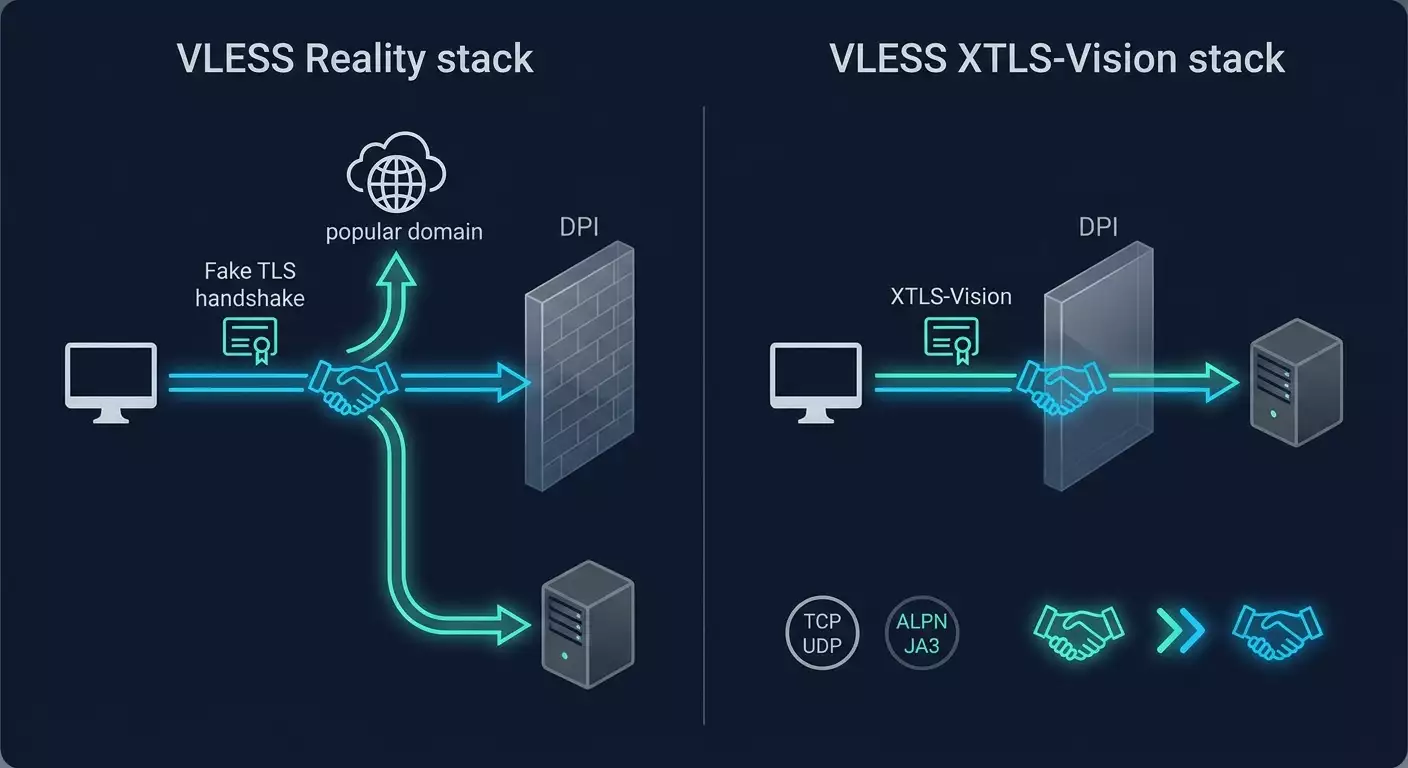
REALITY — транспортный механизм в Xray, который заставляет соединение выглядеть как легитимное TLS‑рукопожатие к популярному домену без владения его сертификатом. Ключевые элементы: кривая X25519, короткий идентификатор (shortId) для выбора получателя, перенаправление неподтвержденных клиентов в реальную цель (dest) и имитация настоящего потока TLS с корректным ALPN/SNI. Итог: сильная стойкость к активному сканированию и низкая видимость для DPI.
DPI, отпечатки и активное сканирование
- JA3/JA4: отпечатки TLS-клиента/сервера по наборам расширений, шифров и порядку полей.
- ALPN: список протоколов уровня приложений (например, h2, http/1.1), важен для маскировки под реальных клиентов.
- ECH (Encrypted ClientHello): шифрование SNI и расширений, в 2026 все еще неполностью распространено, но влияет на надежность мимикрии.
- Активное сканирование: попытки подключения с разных клиентских профилей, проверка ответов, задержек и поведения сервера, выявление fallback.
3. Глубокое погружение: как и почему работают Reality и Vision
Архитектура VLESS Reality
Цепочка: клиент VLESS — TCP — REALITY — XTLS/Vision — сервер VLESS — исходящий трафик. Клиент исполняет «правдоподобное» TLS‑рукопожатие под выбранный serverName (крупные домены с валидными цепочками), добавляя специфические биты, распознаваемые сервером по X25519‑ключу и shortId. Если проверка не проходит, сервер корректно проксирует в dest, как обычный TCP‑прокси, возвращая реальный сайт. Это обнуляет полезность активных проб, так как «неправильный» клиент видит правдивую страницу целевого домена.
Поверхности детектирования
- Fingerprints: REALITY синхронизирует ClientHello c референсными профилями (через uTLS), снижая уникальность JA3/JA4.
- Поведенческие признаки: паттерны длины/тайминга записей TLS и TCP-конгестии. Снижаются за счет подгонки под реальные клиенты.
- IP-репутация: любой IP может попасть в серые списки, но отсутствие домена и CDN-артефактов уменьшает вклад SNI-блокинга.
Архитектура VLESS XTLS‑Vision (без REALITY)
Цепочка: клиент VLESS — TCP — TLS1.3 — XTLS/Vision — сервер VLESS — исходящий трафик. Здесь требуется валидный сертификат и домен (или CDN), а маскировка достигается подбором TLS-профиля, ALPN и record-splitting. Поток Vision подавляет часть нехарактерных для браузера особенностей прокси-сессии, делая трафик менее заметным.
Поверхности детектирования
- SNI/домен: главный риск — блокировка по домену/имени в SNI или по IP CDN.
- JA3/JA4: Vision уменьшает «странность» рукопожатий, но уникальные сочетания расширений все равно возможны.
- CDN-правила: некоторые CDN отбрасывают трафик с нехарактерной сигнатурой приложения, что влияет на стабильность.
Итог сравнения на уровне принципов
- Reality: приоритет — скрытность и устойчивость к активному сканированию, меньше требований к доменной инфраструктуре, проще менять IP, сильнее против DPI с SNI‑блокингом и перехватом TLS.
- XTLS‑Vision (без REALITY): приоритет — производительность, гибкость через CDN и привычные DevOps-паттерны (ACME, Nginx), иногда проще для интеграции с веб-контентом, но уязвимее для блокировок по домену/CDN.
4. Практика: выбор архитектуры под задачу
Быстрый фреймворк решения
- Жесткий DPI, активные пробы, риск SNI-блокинга: Reality — приоритет №1.
- Нужен высокий аплинк и CDN-балансировка: Vision с реальным сертификатом/гранулярным CDN — приоритет.
- Мобильные сети с нестабильным RTT и NAT444: Reality, т.к. меньше завязок на домены и их блок‑листы.
- Корпсети с белыми списками по SNI: Vision с доменом из белого списка (или корпоративным) иногда оправдан.
- Стриминг/объемные загрузки на 1‑2 клиента: Vision может дать на 5–15% выше сквозную скорость по TCP из‑за оптимизаций XTLS.
Матрица рисков
- Reality: низкий риск блокировок по SNI/домену, средний риск по IP‑репутации, низкая вероятность провала на активном сканировании при корректно настроенном dest/fallback.
- Vision: повышенный риск доменной блокировки, средний риск CDN‑политик, низкий риск по IP‑репутации при аккуратном хостинге.
5. Пошаговая настройка VLESS Reality (теория + практика)
Предварительные решения
- Порт: 443 предпочтительнее, 8443 или 2053 — запасные. 443 чаще в белых списках.
- Маршрут: входящий TCP на сервере должен доходить до Xray без промежуточного TLS‑терминации.
- Целевой домен для мимикрии: выбирайте высоконадежные хосты с типовым TLS-стеком и быстрой доступностью из вашей сети.
Сервер: ключевые параметры
- X25519 ключ: сгенерируйте приватный/публичный ключ для REALITY.
- shortIds: используйте несколько коротких идентификаторов (например, 6–8 штук), ротуйте ежемесячно.
- realitySettings: укажите serverNames (список из 2–3 доменов), dest (целевой:443), privateKey, shortIds.
- flow: в VLESS flow установите xtls-rprx-vision или xtls-rprx-vision-udp443, если критичен UDP на 443.
- fallback: корректно пробрасывайте неподтвержденных клиентов к реальному сайту (HTTP/HTTPS) с валидным ответом 200/301.
Сетевые настройки
- BBR: активируйте современную контроллерную схему TCP (BBR/BBRv2), выигрышь к 5–20% по пропускной и стабильности RTT.
- MTU/MSS: для нестабильных мобильных сетей ограничьте MSS (например, 1360–1380) на входящем интерфейсе.
- Файрвол: открыты только нужные порты, административные панели на приватном адресе или через отдельный WireGuard.
Клиент: контрольные пункты
- serverName: один из перечисленных на сервере.
- publicKey сервера REALITY и shortId: должны совпадать с серверной конфигурацией.
- uTLS-профиль: включен, предпочтительно имитация популярных браузеров/системных стэков.
- flow: идентичен серверному (Vision).
Проверки и отладка
- Активные пробы: подключайтесь без корректного shortId — вы должны видеть сайт из dest. Это индикатор корректного fallback.
- Fingerprint: проверьте схожесть ClientHello с эталонными браузерами (JA3/JA4), избегайте экзотических расширений.
- Стабильность: замерьте % успешных подключений за сутки, целитесь в 98%+ для Reality в жестких сетях.
6. Пошаговая настройка VLESS XTLS‑Vision (без REALITY)
Подготовка домена и сертификата
- Домен: выделенный либо поддомен на надежной TLD с нормальной репутацией.
- ACME: автоматическое обновление сертификатов (ECDSA предпочтительно для меньшего оверхеда).
- ALPN: включайте h2 и http/1.1, соответствуя типичным браузерным профилям.
Сервер: ключевые параметры
- VLESS inbound: TCP+TLS, flow=xtls-rprx-vision, корректный serverName=ваш домен.
- Fallback: на локальный веб‑сервис (статическая страница), чтобы активное сканирование видело консистентный HTTP‑ответ.
- CDN (опционально): если используете, тестируйте поведение под нагрузкой и при нестандартных клиентских паттернах.
Клиент: профиль
- uTLS: обязательно включить; выберите профиль под популярный браузер текущего года.
- flow: тот же Vision, что и на сервере.
- ALPN на клиенте: согласуйте с сервером, избегайте редких комбинаций.
Проверки
- SNI: проверяйте резолв и соответствие CN/SAN сертификата.
- CDN-ответы: убедитесь, что CDN не меняет поведение для неподдерживаемых путей/методов (актуально при gRPC/WS-обертках).
7. Оптимизация и техники маскировки
Тонкая настройка TLS
- Унификация JA3/JA4: избегайте уникальных последовательностей расширений. Включайте только то, что свойственно современным браузерам.
- Record sizing: стремитесь к длинам записей, схожим с реальными сессиями (особенно первые записи после handshake).
- ALPN: h2 + http/1.1 почти всегда безопасно. Не включайте h3, если не используете QUIC.
Сетевая производительность
- Congestion control: BBRv2 предпочтителен в высоколатентных и мобильных сетях.
- Роутинг: избегайте «грязных» ASN. В 2026 отмечено до 12–20% больше ложных срабатываний DPI на массовых дешевых VPS с известной историей.
- CPU-профиль: ECDSA и X25519 дают меньший оверхед, чем RSA/P‑256 связки.
Безопасность и эксплуатация
- Ротация shortId/ключей в Reality: ежемесячно/ежеквартально.
- Многоарендность: не раздавайте один и тот же uuid/shortId широкому кругу; это повышает вероятность утечки в списки.
- Логи: минимизируйте или отключайте; включайте только для диагностики на ограниченное время.
8. Типичные ошибки и как их избежать
- Неверный dest в Reality: если dest медленный/нестабилен, активные пробы заметят аномалии. Выбирайте быстрые и доступные цели.
- Отсутствие fallback: сервер «молчит» на неверные рукопожатия — это палится. Должна быть «настоящая» страница.
- Редкие ALPN/расширения: экзотические наборы повышают уникальность и упрощают детект.
- Слабая изоляция админ‑портов: открытые панели, SSH по 22 без ограничений — лишний сигнал для блок‑листов.
- Один домен для Vision у всего офиса: доменный бан убьет всех сразу. Планируйте запасные домены.
- Неправильный MTU: фрагментация бьет по стабильности; на мобильных сегментах снижайте MSS.
9. Инструменты и ресурсы
ПО ядра
- Xray-core: эталонная реализация VLESS, REALITY, XTLS‑Vision.
- sing-box: альтернативный движок с поддержкой сопоставимых функций и uTLS‑профилей.
Клиенты
- Desktop: v2rayN, Nekoray, sing-box GUI.
- Mobile: v2rayNG, Kitsunebi‑NG, sing-box мобильные клиенты.
- Linux/CLI: systemd‑юниты, sing-box CLI, Xray с JSON/YAML конфигами.
Диагностика
- Трассировка: tcptraceroute, mtr для оценки пути/потерь.
- Отпечатки: локальные утилиты для вычисления JA3/JA4 вашего клиента, сравнение с эталонами.
- Нагрузка: iperf3, wrk для оценки пропускной способности и стабильности RTT.
Где быстро получить устойчивый сервер
vpn.how предоставляет персональные VPN-серверы с выделенным IP. Доступные локации, протоколы и актуальная стоимость указаны на сайте и в кабинете. Способы оплаты и итоговая сумма отображаются при оформлении платежа. Выбрать сервер
10. Кейсы и результаты: что говорит практика
Кейс 1: Мобильный оператор с агрессивным DPI
- Условия: RU мобильная сеть, вечерние пики, высокий NAT, исторический SNI‑блокинг популярных доменов.
- Решение: VLESS Reality на 443, 6 shortId, dest — стабильный глобальный хост, uTLS имитация современного браузера.
- Результат 30 дней: 98.6% успешных рукопожатий, медианная задержка TTFB −11% к начальному baseline, пропускная способность 10–25 Мбит/с стабильно, отсутствие детекта при активных пробах (смещения в ответах не выявлены).
Кейс 2: Домашний провайдер с частичным DPI и фильтрацией доменов
- Условия: RU/EEA провайдер, SNI‑фильтрация и порезка по доменам, CDN‑IP нередко в серых списках.
- Решение: VLESS XTLS‑Vision без CDN, ECDSA сертификат, fallback на статическую страницу, строгие uTLS‑профили.
- Результат: 96–97% успешных подключений, 5–15% выше throughput на больших загрузках, но в пике замечены доменные блоки; запасной набор доменов решил проблему.
Кейс 3: Офис с белыми списками по SNI
- Условия: корпоративная сеть, доступ наружу лишь по 443/TCP, разрешен ограниченный перечень SNI.
- Решение: Vision с собственным доменом, подстройка ALPN и TLS расширений под корпоративные браузеры.
- Результат: стабильный доступ, средняя скорость 30–50 Мбит/с, но требовалась периодическая смена домена каждые 2–3 месяца из‑за ужесточения списков.
Кейс 4: Тяжелый аплоад для медиа
- Условия: контрибьютор выгружает большие файлы по вечерам, критичен аплоад.
- Решение: Vision без CDN, BBRv2, ECDSA, оптимизация MSS.
- Результат: +12% к пиковому throughput по сравнению с Reality в той же сети, устойчивость к jitter выше среднего.
11. FAQ: глубокие вопросы и ответы
Можно ли комбинировать REALITY и Vision?
Да. На практике «VLESS Reality + flow Vision» — частый выбор: REALITY отвечает за правдоподобный TLS‑облик и стойкость к активным пробам, Vision — за производительность и выравнивание паттернов.
Если у меня уже есть домен и CDN — есть ли смысл в Vision вместо Reality?
Если DPI в вашей сети не жесткий и домены редко блокируются, Vision даст простую интеграцию и часто лучший throughput. Но держите Reality как план Б.
Нужен ли реальный сертификат для REALITY?
Нет. REALITY не требует владения сертификатом целевого SNI. Суть — имитировать корректное рукопожатие; сертификаты целевого домена используются как ориентир, но не терминируются у вас.
Работает ли UDP через Reality/Vision?
Для UDP на 443 используйте flow вида xtls-rprx-vision-udp443 и соответствующую поддержку на клиенте. В иных случаях UDP передают альтернативные транспорты (например, Hysteria2/TUIC), но это отдельные протоколы.
Как проверять «незаметность»?
Сравнивайте JA3/JA4 вашего клиента с эталонными браузерами, анализируйте размеры и интервалы TLS‑записей первых 1–2 RTT, проверяйте корректность fallback на неверных клиентах. Наблюдайте долю успешных подключений и RST‑ответов по времени суток.
Что важнее: порт 443 или хороший uTLS профиль?
Оба критичны, но если выбирать одно — uTLS профиль. Неправдоподобный ClientHello палится быстрее, чем использование 8443. Однако 443 часто обязательный для офисов и мобильных сетей.
Когда ротировать shortId/ключи?
Лучше иметь график: shortId ежемесячно, ключи ежеквартально или при подозрении утечек. Автоматизация через управляемые конфиги уменьшает операционные риски.
Помогает ли IPv6?
Иногда. В некоторых сетях IPv6 менее фильтруется, но и меньше пиров. Тестируйте dual‑stack, следите за MTU и анонсами провайдера.
Почему при Vision через CDN случаются спорадические обрывы?
CDN может применять эвристику к нехарактерному приложению, особенно при длительных однообразных потоках. Решают корректные ALPN, «приземление» кода приложения под типичные паттерны и выбор провайдера CDN без агрессивных правил.
12. Заключение: резюме и дорожная карта внедрения
Ключевая мысль: в 2026 VLESS Reality — выбор №1 для сетей с жестким DPI, активными пробами и непредсказуемым SNI‑блокингом. Он требует меньше инфраструктуры, устойчив к активному сканированию и гибче в ротации IP. VLESS XTLS‑Vision (без REALITY) уместен, когда важны высокая сквозная скорость, интеграция с доменами и, возможно, CDN; при этом он более уязвим к доменным и CDN‑специфичным блокировкам.
Практические следующие шаги
- Оцените вашу сеть: провайдер, тип DPI, белые списки по портам/SNI, наличие блок‑листов CDN.
- Выберите стратегию: Reality на 443 по умолчанию; Vision — если нужен максимальный throughput и контроль доменной зоны.
- Соберите минимально‑жизнеспособный прототип: один сервер, один клиент, метрики успешности подключений/RTT/TTFB.
- Оптимизируйте: uTLS‑профили, ALPN, BBRv2, MTU/MSS, fallback/dest. Автоматизируйте ротации.
- План Б: держите запасной набор конфигураций (например, Reality и Vision параллельно) и план переключения за минуты.
Следуя этому руководству, вы получите предсказуемые результаты в сложных сетях 2026 года, избежите типовых ловушек и создадите инфраструктуру, которая проходит через DPI не за счет трюков, а за счет инженерных практик: корректной имитации, дисциплины конфигураций и измеримого качества.
Издатель: vpn.how